
Independent WebRTC analyst
The leading authority on CPaaS & WebRTC.



 5,000+ subscribers
Join 5,000+ WebRTC professionals. No spam.

A tool I built · rtcStats
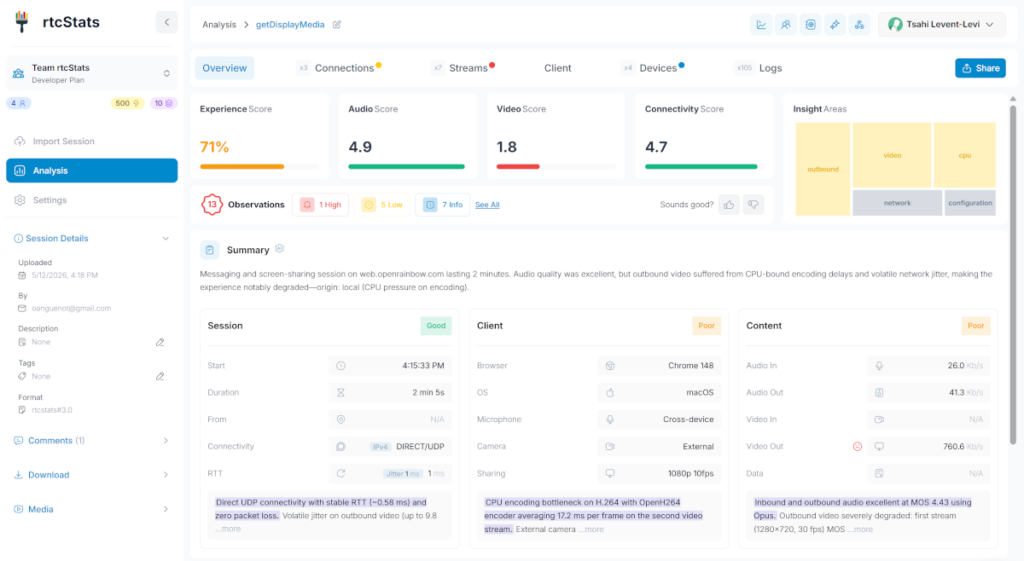
Debug WebRTC issues faster.
Real-time diagnostics for live calls. Drop in a session ID, see bitrate, packet loss and jitter at a glance, and pinpoint the moment things went wrong.
What's on offer
Free reports, an email course, and the deeper dives.
WebRTC for Business People
A 60-page primer on what WebRTC is, who uses it, and where the market is going.
WebRTC Developer Tools
65+ tools across 13 categories, scored for quality and how often AI recommends them. Find your stack.
Connect WebRTC Sessions Effectively
A short email course on signaling, ICE, and getting peers reliably connected.
My WebRTC Courses
Structured, in-depth training to get your team productive on WebRTC in days, not months.

Hello!
I am Tsahi Levent-Levi
I am a developer by heart. Always have been. The thing is, I found out I love writing and looking at the bigger picture of product and strategy. I joined the world of consulting and entrepreneurship when WebRTC was announced.
For the last 25 years, I've been working in the software communications space as an engineer, manager, marketer, CTO, CPO, CEO and Co-founder; changing my viewpoints so I won't get bored.
Today I help companies simplify communication technologies, creating elegant and effective solutions.
What others say
Trusted by engineering leaders across the WebRTC industry.
Tsahi is a true WebRTC expert. His thorough diagnostic gave us good, actionable feedback we used to ship.
More than a technologist. Tsahi is an incredible coach and mentor.
Most WebRTC content we found was either too shallow or outdated. Tsahi’s course completely changed things for our team.
Shortened our development cycles materially. Extremely well connected in the industry.
Essential reads
If you're new here, start with these.
Recent posts
Latest from the blog.
Twilio SIGNAL 2026: the pivot from CPaaS to conversation infrastructure
Twilio SIGNAL 2026 was not a new channel. It was a repositioning: the Conversation Layer, what it means for WebRTC, and the lock-in nobody named on stage.
WebRTC won't fix your call quality. Observability will
Switching WebRTC stacks won't fix call quality you can't see. Why observability, not your transport, decides how your calls actually perform.

The vendor you're about to bet on can't see the market. Neither can you
Every vendor sees only the deals that reach them. The 2026 Video API Report maps the market no insider can see and no buyer has time to build.