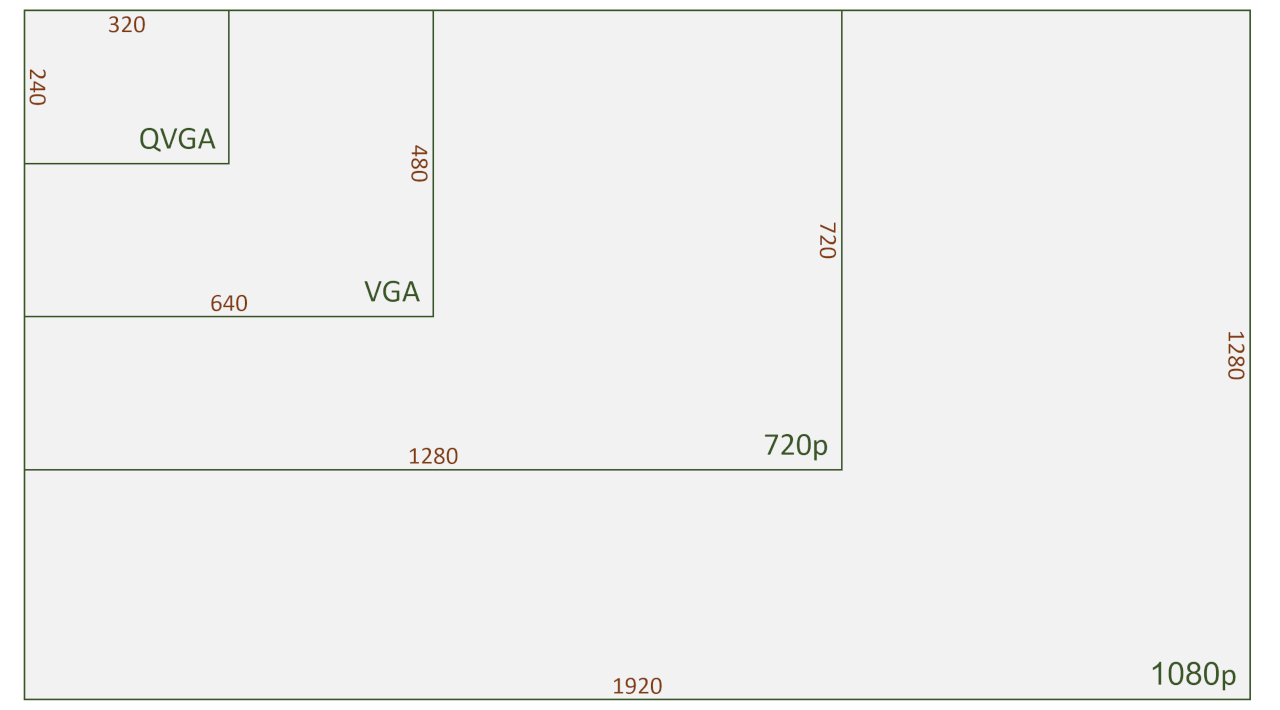
HD stands for High Definition. In video, HD means a resolution of 720p (1280×720 pixels) or higher. Full HD (FHD or 1080p) is 1920×1080 pixels. 4K (UHD) is 3840×2160 pixels.
In audio, HD refers to wideband or super-wideband audio at 16 kHz sampling rate or higher - noticeably clearer than the 8 kHz narrowband audio of standard telephone calls.
HD video in WebRTC
WebRTC supports HD and even higher resolutions, but the actual resolution achieved in a session depends on several factors:
- Network conditions: Available bandwidth must support the higher bitrate required for HD
- CPU capacity: Encoding and decoding HD video requires more processing power
- Camera capabilities: The sending device’s camera must support HD capture
- BWE decisions: The browser’s bandwidth estimation algorithm dynamically adjusts resolution based on network conditions
Typical bitrate requirements:
- 360p: 300-600 kbps
- 720p HD: 1-2 Mbps
- 1080p Full HD: 2-4 Mbps
In group calls, HD is often reduced to lower resolutions via simulcast to conserve bandwidth, sending HD only to the active speaker’s video while displaying others at lower resolutions.
HD audio
In audio, HD refers to wideband or super-wideband audio (16kHz+ sampling rate), which WebRTC supports through the Opus codec. This provides significantly better voice quality than narrowband PSTN audio.