
Newsflash: Data has... Diminishing Returns
Recently, we've been hearing about the "industrial internet" and how it has better uses for Big Data. My view? It's bollocks.
Guess what? Big Data is Big Business. It is also hyped and questioned on a daily basis as to its usefulness. This is probably why Wikibon's Keff Kelly have decided to target the "industrial internet" lately, touting the fact that there Big Data has Big Meaning:
It holds for data as well, and it is also the reason why we need to collect boatloads of data now in order to optimize the things we seek to improve. It also means it is a good thing our storage, network and computation has exponential growth to them – it brings everything into a nice linear advance.
So now that we are looking for the first time into digitizing the physical world properly, we find there data that can be exploited, and we see great returns on it. A no brainer if you ask me.
To illustrate two extreme but useful comparisons, consider the impact of administering the wrong medication to a critically ill patient versus serving up the wrong display ad to someone browsing the Internet. Or the consequences of engine failure on an airliner 30,000 feet over the Pacific Ocean versus an online shopping application crashing during checkout. In both cases, the potential value and consequences of the former dwarf those of the latter.To put things in context bit, this article is all about how the physical world (coined here as the industrial internet) can really improve by Big Data. And I think that is correct, but it misses two important points in my view:
- The physical world is running blind compared to the virtualized one
- You can't separate the virtual from the physical any longer anyway
Running Blind
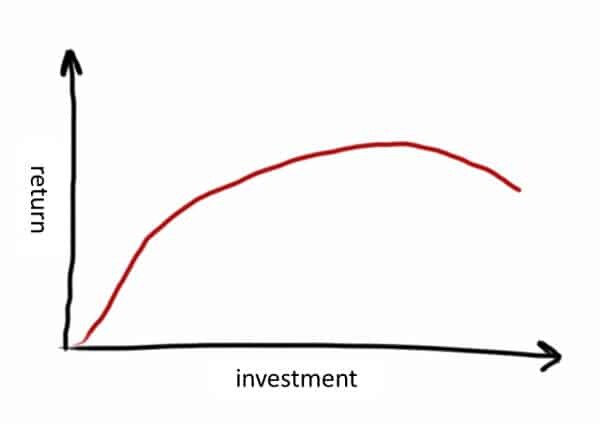
Let's start with the first item: it isn't that the data we have in the physical world worth more than what we have in the virtual one – it is just that it is the first and only data set that we currently have for the physical world. Talk to any economist and you will learn about the law of diminishing returns. In essence, it means that if you put more effort into something, the return you gain will diminish the next time you apply that additional effort.
It holds for data as well, and it is also the reason why we need to collect boatloads of data now in order to optimize the things we seek to improve. It also means it is a good thing our storage, network and computation has exponential growth to them – it brings everything into a nice linear advance.
So now that we are looking for the first time into digitizing the physical world properly, we find there data that can be exploited, and we see great returns on it. A no brainer if you ask me.
Merging Physical and Virtual
That other notion? About the industrial internet, and it being somehow different from the internet? Of a physical world that is useful and a virtual one comprised only of ads? That's stupid. Doctors today do surgery when they think they need to. They work more out of gut feeling than anything else. They cut blind and check later to see what the results were. Similar to how engineers used punch cards several decades ago – you placed your holes on paper, put it in a queue for the machine to process, got to see the result some time later, and then dealt with the bugs.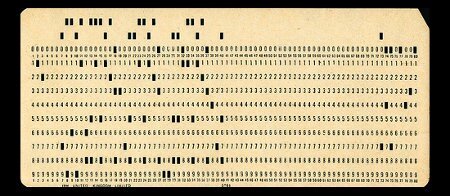

Tsahi Levent-Levi
Independent WebRTC analyst. I help companies ship real-time communications they can actually monitor. 20+ years in the comms space, last 13 focused on WebRTC.
More about Tsahi →
So instead of the engineer telling the pig iron hauler how to do his job it's the data scientist in this century.
Frederick Winslow Taylor will like this :-)